
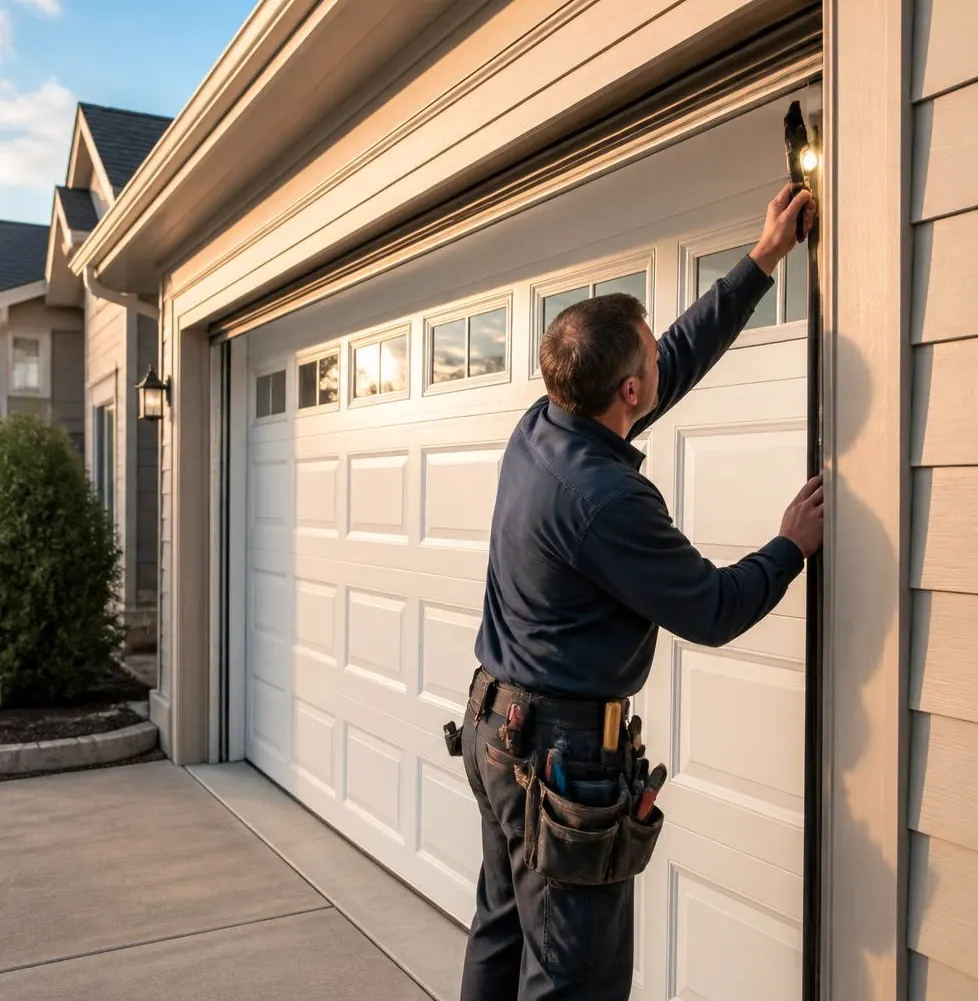
The Mistake Most Homeowners Make First
When a garage door opener starts banging, grinding, or rattling, almost everyone reaches for the same thing: the can of WD-40 sitting on the shelf. It's tempting because it's already in the garage, it's cheap, and spraying down every moving part feels like you're doing something productive. For a day or two, it might even seem quieter.
The problem is that WD-40 is a solvent and water-displacer, not a real lubricant. It thins out existing grease, attracts dust and grit, and leaves hinges and rollers gummier than before. In Kenton County's humid summers and salty, icy winters, that grit buildup turns into grinding noise within weeks. If you've sprayed your whole door with it, wipe it off before moving on to the steps below.
Tools You'll Need
- Socket wrench set or adjustable wrench
- Work gloves and safety glasses
- Sturdy step ladder
- Flashlight
- Silicone-based garage door lubricant or white lithium grease (not WD-40, not motor oil)
- Clean rag
Step-by-Step: What You Can Safely Do Yourself
- Listen before you touch anything. Open and close the door a few times and pay attention to where the noise happens: at the top near the motor, along the track, or down low near the rollers. This tells you whether you're chasing a hardware problem, a lubrication problem, or an opener problem.
- Tighten every bolt and bracket. With the door closed and the opener unplugged, go along the track brackets, hinges, and the opener's mounting bolts with your wrench. Kentucky's big seasonal temperature swings cause metal to expand and contract constantly, which loosens hardware over months. A quarter-turn tightening pass twice a year, especially heading into winter, stops a lot of rattling before it starts.
- Lubricate the right parts, the right way. Apply silicone-based lubricant or white lithium grease to the hinges, rollers (if they're metal), and the opener's chain or screw drive. Avoid spraying the springs themselves with silicone, and never grease the plastic idler pulleys. Wipe off excess so it doesn't attract dust.
- Check your rollers. Worn, cracked, or flat-spotted rollers are a common source of a rhythmic thumping noise. If you see visible wear and you're comfortable doing it, nylon rollers are a reasonably simple swap for a homeowner with basic tools. If the rollers are steel and original to an older door, this is a good moment to call a technician instead, since steel rollers are noisier by design and a tech can advise whether a roller upgrade makes sense.
- Inspect the weatherstripping and bottom seal. A stiff, cracked seal can cause banging as the door closes, especially after a cold snap. Replacing it is a straightforward DIY task and worth doing before the ice and salt of a Northern Kentucky winter sets in.
Where DIY Should Stop
Some parts of a loud garage door are not worth the risk of handling yourself:
- Torsion and extension springs. These are under extreme tension and are the single most dangerous component on the door. A squeaking or popping noise from the springs means they need professional attention, not a homeowner's lubricant can.
- Cables and drums. Fraying or noise here often signals a cable that's about to fail, which can let the door drop suddenly.
- Misaligned or racked tracks. If spring storms or a hard impact have knocked the track out of true, forcing it back into place yourself can damage the opener or the door panels.
- Opener gear and motor noise. Grinding from inside the opener housing usually means worn internal gears, which requires taking the unit apart.
When a Belt-Drive Swap Makes Sense
If you've tightened hardware, lubricated correctly, and the door is still loud, the opener itself may be the real issue. Chain-drive openers are inherently noisier, and as they age, that chain slap gets worse, especially once cold weather stiffens the grease inside the unit. A belt-drive opener uses a reinforced rubber belt instead of a metal chain, cutting most of the mechanical noise, which matters if the garage sits under a bedroom or close to a shared wall. This is a full opener swap, not a weekend project, since it involves rewiring safety sensors, setting travel limits, and making sure the new unit is properly balanced with the door.
When to Call Independence Garage Door Pro
If you've gone through the DIY steps and the noise is still there, or if you've noticed worn springs, fraying cables, or a track that looks bent, it's time to call in a technician rather than keep tinkering. Independence Garage Door Pro handles Garage Door Maintenance visits to tighten hardware, inspect springs and cables, and correctly lubricate every moving part before winter ice and salt make things worse. If the real problem is an aging, noisy chain-drive opener, we also handle Garage Door Opener Installation, including belt-drive upgrades built for quieter, more reliable operation through Kentucky's cold winters and humid summers.
If your garage door in Independence, KY or the surrounding area is making more noise than it should, give Independence Garage Door Pro a call before the cold sets in. We'll track down the real cause and get your door running quietly again.