
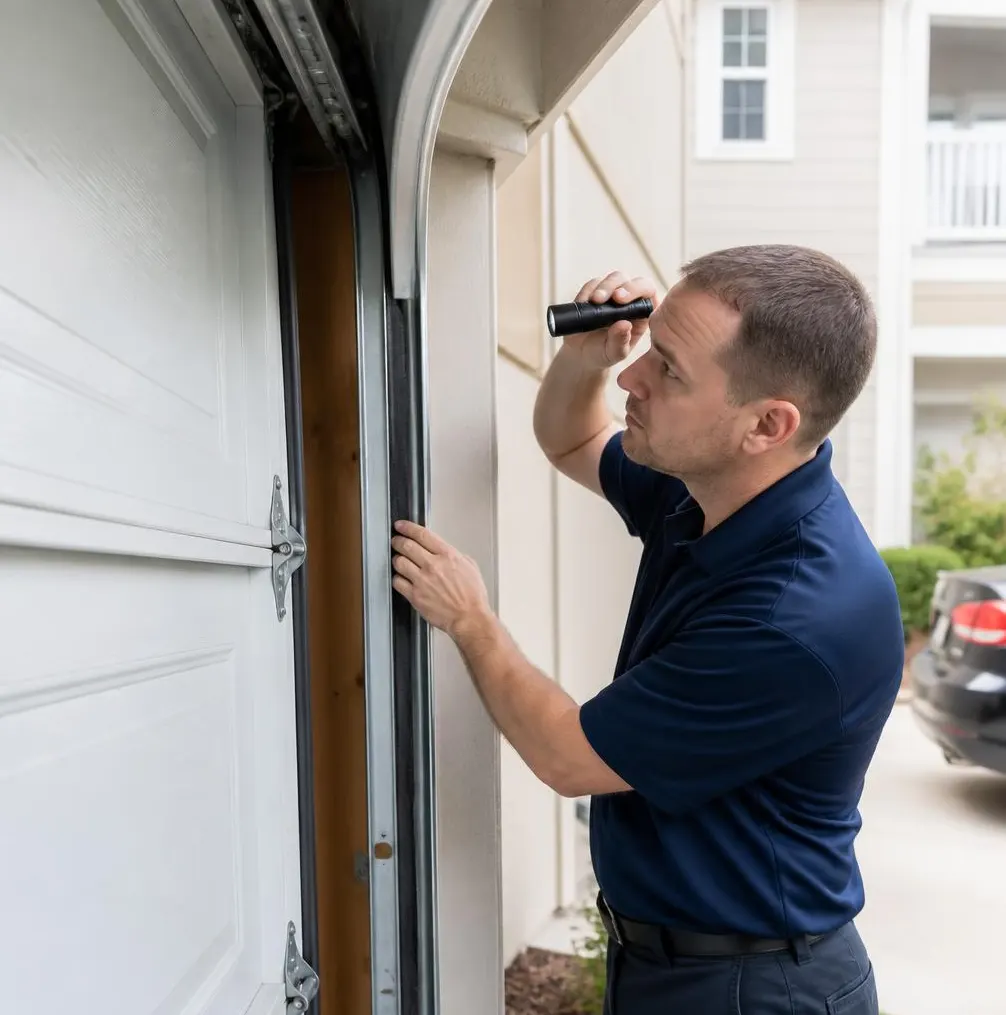
The Mistake Most People Make First
Here's what usually happens: the garage door opener starts acting up, so one spouse orders a shiny new smart opener with a camera, an app, and a battery backup. It gets installed on the same old door, and everyone assumes the safety problem is solved. It's tempting because it's the fun fix — it's visible, it's techy, and the salesperson at the hardware store makes it sound like an upgrade fixes everything.
But a new opener bolted onto an old door doesn't fix the door. The real safety risks on a garage door from the 1990s or earlier usually live in the hardware you can't see from the driveway: the springs, the cables, and whether the door has basic safety sensors at all. If you want to settle the argument, start there.
What Actually Needs Retrofitting
Photo-Eye Sensors
Federal law has required auto-reverse photo-eye sensors on garage door openers since 1993. If your opener predates that, or if someone swapped in an old reused unit without sensors, there's nothing stopping the door from closing on a kid, a pet, or a parked car. This is the single most important retrofit on this list. It's a relatively quick, affordable fix compared to replacing anything structural.
Auto-Reverse Force Testing
Even if sensors are present, the force settings may never have been checked. Place a 2x4 flat on the ground where the door closes. If the door doesn't reverse on contact, the force needs adjusting or the opener needs replacing.
Spring Containment
Older doors with extension springs (the long springs running along the horizontal tracks) often lack containment cables. If one of those springs snaps under tension, it can send metal flying across the garage. Containment cables are inexpensive insurance and should go on any uncontained extension spring system, especially one that's been cycling through a decade or more of Kentucky's temperature swings.
Frayed or Rusted Lift Cables
Check the cables running from the bottom brackets up to the drum. Rust and fraying are common after years of winter road salt tracked in on tires and boots, combined with humid summers that never let things fully dry out. Frayed cables should be replaced before they snap, not after.
Manual Emergency Release
If the red release handle is missing, painted over, or disconnected, that's a genuine safety gap — it's how you manually open the door during a power outage or opener failure. It should work smoothly, every time.
What's Fine to Leave Alone
Not everything old is dangerous. Here's where you can save the argument (and the money):
- Solid wood or steel panels that aren't cracked, warped, or rusted through. A dent is cosmetic, not a safety issue.
- Original tracks and rollers, as long as they're not bent and the door moves smoothly without grinding or jumping.
- Manual locks on the inside of the door, if they still latch correctly.
- The torsion spring itself, if it's been maintained and isn't showing gaps between coils or visible rust pitting. Springs have a cycle life, not an age limit — a well-maintained spring can still have life left even if it's decades old.
Replacing any of these just because the door is old is spending money on something that isn't actually broken. Save that budget for the safety items above.
Why Kentucky Weather Makes the Timing Matter
Heading into winter, ice, snow, and road salt get tracked into garages constantly, and that moisture accelerates rust on springs, cables, and hinges faster than people expect. Fall is the right season to get an older door inspected, before cold weather makes metal more brittle and lubricants thicken up. Come spring storm season, a door with a weak auto-reverse or a corroded spring is a much bigger liability if something goes wrong during high winds or a power flicker.
When to Call Independence Garage Door Pro
If your door predates 1993, or you're not sure whether it has working photo-eye sensors and properly contained springs, that's exactly the kind of inspection worth getting before winter sets in. Our Garage Door Maintenance visits check sensors, cables, springs, and auto-reverse function in one trip, and if a spring or cable needs replacing, our Spring Replacement service handles it safely the same day in most cases.
If you're in Independence, Covington, Florence, Erlanger, Burlington, Fort Mitchell, Hebron, or Walton and you've got a garage door with some real age on it, give Independence Garage Door Pro a call. We'll tell you straight what needs fixing and what's fine to leave as-is.